Monday, October 27, 2014

About Morgan J. Landry -- Morgan's intro for EDU671

 I hope you enjoy the video. I am not Orson Welles nor Woody Allen but I did my best. My name is Morgan J. Landry.


  I am 62-years old. My wife and I just recently celebrated our 40th wedding anniversary. She is a cancer survivor and I am the survivor of various illnesses including but not limited to congestive heart failure.

We have four sons, seven grandchildren and we both love helping others. As for my professional background, I am a photojournalist, a journalist, a mechanic, a guitarist and a singer, besides being an aspiring preacher. I had a life changing experience at 45- years of age and it is because of this damaging heart attack that I moved from doing mechanic work to  my true love of writing. These days the true call of the journalist is buried in some forgotten corner and I enjoy teaching more than being a journalist.
As a K-12 student I somewhat enjoyed school. I loved reading. Instead of daydreaming in class I was often caught writing short stories while the teacher went about his or her lecture to the class. Some of the classes I most enjoyed were those where writing was a part of the course.
Several people touched my life way back when. One was Edward Gianelloni. I found he offered excellent advice, was a great teacher and he taught me that I had great things to offer. More than anything, he paid attention to me and what I had to say. That goes a long way when a kid is in sixth grade in Pierre Part, La. 
Two other teachers whom I remember well are Ms. Bordis and Mr. Abby Vicknair. Both of these individuals were French teachers at the high school level.  These two teachers went beyond the normal call of duty.  They allowed everyone to share an opinion. I encountered so many great people that there  isn’t just one that stands out.
I am enrolled in the MATLT Master's degree program at Ashford University.  In the near future, after earning my Master’s , I sincerely hope to be teaching online courses. It is sincerely because of some of my disabilities that I want to teach online courses  and be able to work from home.
However, I also find that some areas of the real world are extremely discriminatory against age and it makes it difficult to find a job. I am not the only one that feels that way, several of my friends also feel the same way.  Having my Master’s degree will move me towards my goal of teaching online. I also feel that without the Master’s degree I would not be able to do this.

The one quote that I truly feel close to is one by Ralph Waldo Emerson. The secret in education lies in respecting the student.``Without  the teacher showing some respect for the student one can not expect the student to have respect for the teacher.

Saturday, October 25, 2014

Avoid Breakdowns


Avoid Expensive Breakdowns
Morgan J. Landry
EDU 652: Instructional Design & Delivery
Professor: Lisa Marie Johnson
October 20, 2014


Avoid Expensive Breakdowns
Many people are not knowledgeable in the car maintenance department these days.  It used to be, at one time long ago, that mostly women lacked the knowledge to repair, maintain, or perform emergency roadside fix-ups.  Not anymore, in today’s world the number of people lacking auto repair and maintenance know-how is about equal across both genders.  Yet, just a once in the morning check over and keeping up with a maintenance schedule can prevent expensive on the side of the road breakdowns.  It’s just a simple matter of popping the hood open, giving the engine the old once-over and checking fluids and hoses.
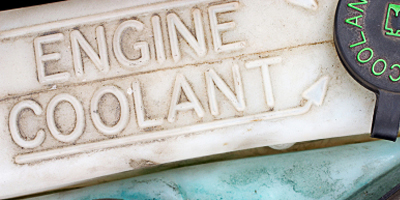
In order to stay worry free on the way to work, school, or whatever your destination might be, it is imperative to conduct a daily once over on a vehicle’s vital functioning parts.  These include fan belts, fluid levels, engine oil, brake fluids, and water (engine coolant).  Engine coolant keeps a vehicle from overheating.  Checking the coolant level is of major importance before driving off in the morning.  The Automobile Association (The AA) says to check your coolant regularly, weekly if possible (para. 1).  However, as a former mechanic it is important to let you know, from experience, that checking the coolant level everyday will not hurt anything, not even your vehicle, and it will certainly reveal telltale signs of an approaching and possible preventable catastrophe (major on the side of the road breakdown).  The engine coolant is housed in the expansion bottle, usually located on the passenger side front of the vehicle under the hood, and is commonly a white plastic container marked with the words Engine CoolantSome vehicles have the engine coolant bottle on the driver’s side front of the engine compartment.  One word of caution, never open this container after the engine has warmed up or after a short or long drive.  Always open, if you must, early in morning before a drive or after the vehicle has been parked for more than an hour.  Serious burns can occur if a vehicle is running on the warm side, or even worse – running hot.  All that is actually necessary, to check the coolant level, is to look at the side of the container or at the top and view the fill mark.  There is a full when hot level mark, plus a full when cold, level mark.  Check brake fluid level, windshield washer bottle level, and power steering fluid, if your vehicle has that.  Also, before starting the vehicle check your engine oil level.  It is important to check this once the engine has set up for an extended period of time or at least, at the bare minimum, after the engine has been off for more than ten minutes.  This makes sure that all the oil has drained back into the oil pan at the bottom of the motor.  It is also a good idea to check coolant hoses for softness or wear or signs of cracks and dry rot.  Check fans belts; most vehicles have one main belt called a serpentine belt.  Check the belt for signs of wear or cracks at least twice a week.  Check tire pressure once a week unless you see a low tire, which is a sign of tire trouble on the horizon.  Always keep tires inflated to proper pressure.  Then finally, before starting on the day’s journey, look on the concrete drive, if you have one, or on the ground, if you don’t have a concrete drive, for signs of oil leaks or other fluid leaks.  Never allow fluid leaks to continue it can always make the problems worse.
The AA has an excellent video on how to check the engine coolant.  Evers (2007) provides good information on performing the check.  Then DIY autotech provides a great and detailed video on underhood checks.  Anthony (no last name available) takes you through checking coolant, checking brake fluid, water hoses, and everything else under the hood.
The last thing on the agenda, to finish your journey to being a responsible car owner with fewer breakdowns is to create a maintenance schedule.  Every vehicle has to undergo certain maintenance at certain miles accumulated.  For example, it is common to check brakes every 12,000 miles; it is common to check antifreeze/engine coolant quality/levels plus the thermostat every six months.  You can find a complete maintenance schedule in your auto handbook that came with your vehicle.  If, by chance you did not get a handbook or lost it then finding a schedule is as easy as the click of the mouse on this link
Check your automotive knowledge; click here to take the test.  If the link does not work, please copy and paste the following link in your URL window.  <https://www.surveymonkey.com/s/65N9XDK>.  Tests are much needed.  Horton (2012) says that tests are needed to create effective e-learning.


REFERENCES
Horton, W. (2012). E-Learning by design (2nd ed.). San Francisco, CA: Wiley.
Checking Your Coolant Regularly. (2014). The Automobile Association. Retrieved from
www.theaa.com/motoring_advice/breakdown_advice/how-to-check-your-engine-coolant.html
Evers, R. (May 21, 2007). Checking your coolant with AA Patrol Nick Evers. retrieved from
https://www.youtube.com/watch?feature=player_embedded&v=rjAAeHqXW6E
How to check car fluids, belts & Perform full underhood inspection (Nov. 21, 2011). Retrieved
from https://www.youtube.com/watch?v=BSlouL8Ekgw
Factory-recommended maintenance. (2014). Retrieved from
http://www.midas.com/services/factoryrecommendedmaintenance/tabid/148/default.aspx